
Smart Packaging ROI: Real Benefits, Hidden Costs, and How to Capture Maximum Value

What You’ll Learn:
Explore the core ROI drivers, benchmarks, and strategies that make smart packaging, RFID and beyond, an essential investment. See how leading brands extract measurable value, avoid hidden pitfalls, and future-proof their approach, with proven statistics, real-world examples, and practical tactics you can use today.
The $24.6 billion smart packaging market promises to revolutionize supply chains, yet 68% of companies struggle to calculate accurate ROI prior to implementation. While Walmart’s RFID mandate and industry leaders like Lululemon’s 98% inventory accuracy achievement demonstrate clear success, most executives remain uncertain about their specific ROI potential. This guide eliminates ROI guesswork by providing proven methodologies, real-world benchmarks, and strategic frameworks that enable confident investment decisions.
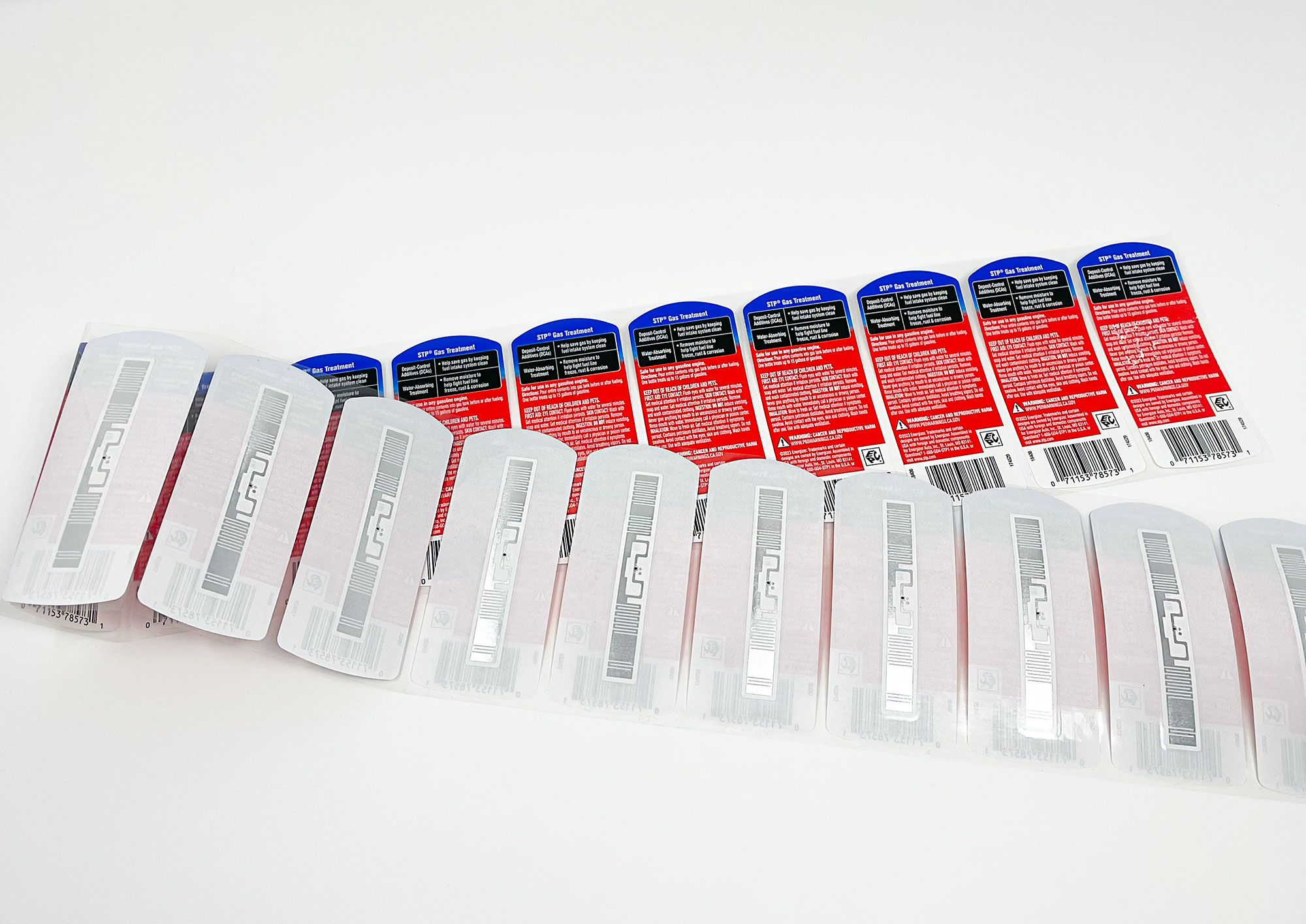
If you’re considering an upgrade or need to meet evolving retail demands, learn more about how Meyers’ custom RFID label solutions empower brands to streamline inventory, prevent loss, and support sustainability, while preserving your packaging’s design and integrity.

ROI at a Glance: The Fast Facts
| ROI Area | Typical Benefit | Real-World Benchmarks |
|---|---|---|
| Inventory Accuracy | 95–99% with RFID | Lululemon: 98% accuracy |
| Labor Efficiency | 30–50% reduction in manual tasks | Daily counts 25x faster |
| Loss Prevention | 40%+ reduction in shrinkage | RFID pilots: 60–80% less in key categories |
| Sustainability | 15–40% less packaging/material waste | 29% lower climate impact vs. Tetra Pak, +$0.10/unit (USD) |
| Payback Period | 12–18 months typical | Pilots: often €25k–€100k start; ROI>250% in 3 years |
| Market Growth | CAGR 9.8% | $24.6B (2023) → $78.91B (2034) |
Companies that implement RFID solutions routinely see inventory accuracy rates exceeding 95%, with substantial labor savings and rapid ROI. For a full breakdown of implementation options and benefits, explore our custom RFID label solutions.
Key Takeaways: RFID solutions routinely enhance inventory accuracy to 95–99%, cut manual labor up to 50%, reduce shrinkage by 40%+, and deliver 12–18 month payback. The market is growing toward $78.91B by 2034.
Why Invest? The 4 Core ROI Drivers
Inventory Accuracy
- Baseline: Traditional inventory methods achieve only 65–80% accuracy, leading to frequent stockouts and excess carrying costs.
- RFID Impact: RFID-driven smart packaging lifts this to 95–99%, slashing errors and enabling almost perfect demand planning.
- Business Value: Higher accuracy means reduced safety stock (by 20–30%), improved cash flow, and faster fulfillment.
- Example: Brands using RFID report annual facility savings of $50,000–$500,000 and near-perfect order fulfillment.
Quick Tip
Track your current accuracy baseline, calculate losses from stockouts/overstock, and estimate ROI using RFID benchmarks for your sector.

Labor Efficiency
- Manual Burden: Inventory tasks often take 20–30 hours per week, with a significant risk of error.
- Automation Power: RFID implementations can “reduce cycle counting time by up to 50%”, leading to increased productivity, with some facilities achieving 25x faster cycle counts.
- Strategic Upside: By redeploying labor to higher-value tasks (e.g., customer care, quality improvement), the operational impact multiplies.
- Calculation Formula: Weekly Hours Saved × Avg. Labor Cost × 52 Weeks = Annual Labor Savings

Loss Prevention
- Shrinkage Costs: Global retail shrinkage exceeds $100B/year. Packaging with real-time RFID/IoT tracking can cut shrinkage by more than 40% in at-risk categories.
- ROI Benchmark: Every $1 invested in RFID for loss prevention can yield $4 in savings.
- Deterrence Bonus: Visibility also adds 10–20% in extra theft deterrence and asset recovery.

Sustainability Impact
- Waste Reduction: RFID-enabled packaging delivers 15–40% material waste savings through accurate demand planning and inventory controls.
- Consumer Premium: 82% of shoppers say they’ll pay more for sustainable packaging, opening opportunities for price lifts and brand differentiation.
- Measurable Gains:
- Over 8M trees reforested by Meyers partners
- Material optimization often pays back within 24–36 months
To learn more about how our embedded RFID tags preserve your brand’s design while enhancing compliance and efficiency, visit our page on RFID packaging technology for retailers
Key Implementation Metrics & Investment Benchmarks
- Three-Year ROI:
250%+ for comprehensive RFID deployments in apparel, retail, and CPG categories. - Typical Payback Period:
12–18 months, sometimes less, for loss prevention pilots. - Pilot Program Costs:
$25,000–$100,000 for focused deployments targeting highest-ROI areas. - Annual Operational Savings:
$50,000–$500,000+ per facility, due to reduced labor, improved accuracy, and lost-shrink savings.

ROI Calculation Example (Inventory, Labor, Loss Prevention):
| Factor | Baseline | Post-RFID Targets | Annualized Savings |
|---|---|---|---|
| Inventory | 80% accuracy | 98%+ accuracy | $150,000 |
| Labor | 25hr/week manual | 12hr/week, plus higher-value redeployment | $70,000 |
| Loss Prevention | 2% shrinkage | 1% shrinkage | $60,000 |
| Total | –– | –– | $280,000/yr |

Common Myths and FAQs
“Is Smart Packaging Only for Large Enterprises?”
No. Small pilots in targeted lines often deliver payback in under 12 months. The modular nature enables scaling over time, starting with the highest-ROI applications.
“Does Tag Cost Decide ROI?”
Not alone. While RFID tag prices continue to fall ($0.05–$0.50/unit), system ROI is determined by integration, scale, and how well your team adopts workflow change.
“Will It Disrupt My Packaging Design?”
Not with advanced embedded tech. Meyers’ RFID solutions preserve existing branding and aesthetics, critical for CPG and retail shelf impact.
“Is Change Management Really That Important?”
Absolutely. The ROI for structured change management is typically strong, with returns ranging from 3:1 to 7:1 that is, for every $1 invested, you get $3–$7 back.
Change Management and Scaling: The Make-or-Break Factors
- Pilot Programs:
Focus initial investments ($25–100k) on clear, measurable use cases; theft prevention and mandate compliance are top early targets. - Metrics Matter:
Define success metrics up front. Track fulfillment rates, shrink, labor hours, and ESG impact. - Change Champions:
Appoint internal advocates for adoption and best-practice sharing. - Iterative Scaling:
Expand from pilot to enterprise, allowing learning cycles and self-funding from early wins (e.g., use shrinkage savings to fund accuracy improvements). - Best-in-Class Spend:
Effective change management typically costs $2,000–$10,000 per site and multiplies realized ROI.
Why Meyers: Proven Results, Unique Advantages
Meyers stands out with:
- 20 years of RFID integration expertise with various deployments, including complex compliance projects.
- Proprietary RFID embedding technology, retains your package’s look and feel, simplifies application.
- Function47 division for advanced printed‑electronics features: conductive ink printing, roll‑to‑roll manufacturing, and custom high‑volume design.
- Carbon-neutral operations sustainable materials, and PrintReleaf partnership: Over 8M+ trees replanted, supporting your ESG goals.
- End-to-end support: From pilot design to scale-up, including full change management training.

5 Steps to Maximize Your Smart Packaging ROI
- Baseline Your Metrics:
Know your current inventory accuracy, labor allocation, and shrink rates. - Start with Focused Pilots:
Choose a high-impact, measurable use case (theft, compliance, inventory). - Commit to Change Management:
Plan for training and process alignment, this is not the place to cut corners. - Track and Broadcast Early Wins:
Measure, share, and reinvest realized savings to fund scaling. - Partner Strategically:
Work with Meyers for proven technology, operational integration, and long-term support.

Ready to Capture More Value?
Smart packaging ROI extends beyond simple cost-benefit calculations to encompass transformational value across inventory accuracy, operational efficiency, loss prevention, and sustainability. With typical payback periods of 12-24 months and three-year ROI exceeding 250%, smart packaging represents one of the most compelling technology investments available. As the market grows toward $78.91 billion by 2034, early adopters gain increasingly valuable advantages through operational excellence and strategic positioning. The frameworks and methodologies in this guide equip you to build a compelling business case that transforms smart packaging potential into measurable business value. Explore our RFID Solutions for guides, case studies, and pilot planning support.

Related Content:
- RFID Solutions
- RFID Mandates 101: Retail’s Future After the Walmart Mandate
- Smart Packaging: Everything You Need to Know
- How Does RFID Work in Product Packaging and Labeling?
- Custom RFID Labels & Tags Solutions
FAQs
An RFID inlay is the internal component containing the chip and antenna, while an RFID tag encompasses the inlay plus additional materials for attachment and protection
Smart packaging improves inventory accuracy, reduces shrinkage, enhances sustainability, and can provide interactive consumer experiences. Meyers’ embedded RFID solutions are great for shelf appeal, as
Calculate ROI by comparing the total savings from efficiency, accuracy, and reduced shrinkage against your total investment over tim
Most businesses see payback within 12–18 months, with full ROI often realized in three years for well-executed programs.
Last Updated on January 7, 2026