
Top Carton Packaging Design Trends for 2026: Smart, Sustainable, and Consumer-Driven

Key Takeaways
In 2026, packaging trends reflect major shifts in technology, sustainability, and consumer expectations. In this article, we explore the top carton design trends that brands need to watch, including smart packaging powered by GS1 Digital Link, AI-driven personalization, regenerative materials, reusable structures, and automation-ready formats. These innovations are transforming how brands connect with consumers, reduce environmental impact, and stay agile in increasingly competitive markets. You’ll discover how leading brands are using packaging not only to meet current demands but also to future-proof their strategies and stay ahead of evolving supply chain challenges.
Quick Answer: What are the top carton packaging design trends for 2026?
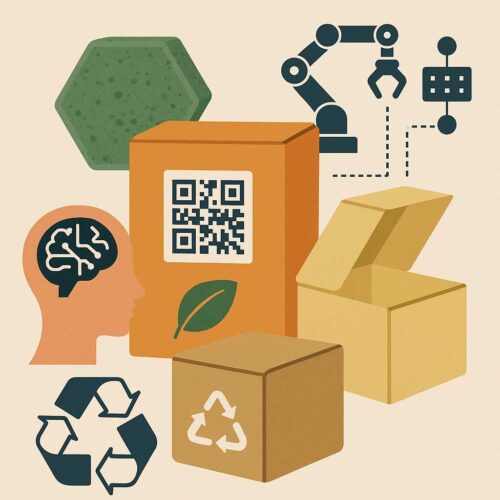
In 2026, carton packaging trends focus on smart connectivity through GS1 Digital Link, AI-driven personalization, regenerative materials, reusable structures, automation-ready formats, and premium tactile finishes designed to improve sustainability, efficiency, and consumer engagement.
What’s Next for Carton Packaging in 2026?
Folding carton packaging in 2026 is not only smarter and greener, it’s also more strategic than ever. As innovation reshapes every layer of the supply chain, cartons have evolved far beyond simple product protection. They now solve operational challenges, enable real-time engagement, and serve as powerful brand storytelling tools.
With rising demand for personalization, sustainability, and digital transparency, brands across industries, from food and personal care to electronics and nutraceuticals, are embracing eco-conscious, print-agile, and connected packaging formats. These advanced solutions build trust, meet new standards, and elevate shelf presence in an increasingly complex retail landscape.
Why is Carton Packaging Still a Popular Packaging Choice in 2026?
In response to shifting consumer expectations and operational demands, many industries continue to rely on paperboard cartons as a go-to packaging format.
Key advantages in 2026:
- Lightweight, widely recyclable materials
- Fully customizable visuals and structures
- Support for digital printing for short-run packaging
- Compatibility with automation and smart manufacturing systems
- Ideal foundation for connected packaging examples
- Expanded print flexibility through hybrid flexographic printing, offering both high-volume efficiency and premium finish options
Whether in retail or e-commerce, cartons continue to deliver functional, visual, and environmental performance while adapting to evolving production needs.
For solutions tailored to your supply chain and customer base, explore our custom folding cartons.
The Top Carton Design Trends for 2026
1. Smart Packaging with Real-Time Connectivity
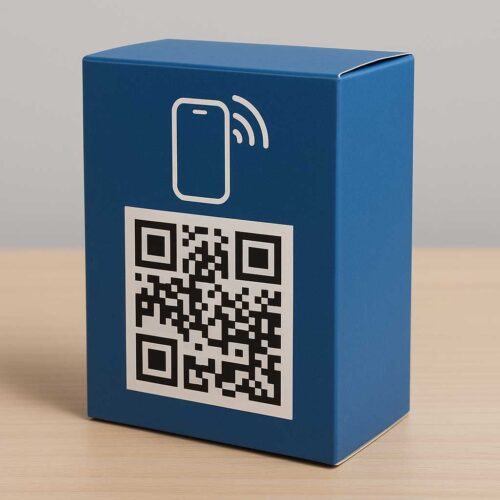
Among the most impactful packaging innovations in 2026 is the rise of GS1 Digital Link 2D barcodes, which are transforming how consumers and brands interact with folding carton packaging.
Did you know?
By 2027, 2D barcodes will replace traditional UPCs in most global retail environments (Packaging World). This shift is being driven by GS1 Sunrise 2027, a global initiative encouraging all retailers and manufacturers to support 2D barcode scanning at point-of-sale by that year.
Leading brands like Unilever, Procter & Gamble, and PepsiCo are already integrating smart barcodes to deliver detailed product origin data, sustainability insights, and personalized promotions, all accessible through a single scan (Packaging Digest).
These upgraded barcodes turn your carton into a powerful digital engagement tool, bridging the gap between physical packaging and digital storytelling.
Use smart cartons to:
- Track product lifecycle and inventory in real-time
- Offer digital instructions, promotions, and loyalty rewards
- Display sustainability certifications and sourcing information directly on the packaging
- Improve traceability and supply chain transparency
- Enable product authentication and tamper-evidence
By implementing GS1 Digital Link, brands can “bridge the gap between physical packaging and digital storytelling“, giving consumers the transparency, trust, and interactivity they expect in 2026.
Smart folding cartons don’t just package your product, they power your brand’s connected experience.
To see this technology in action, let’s look at how forward-thinking brands are already applying GS1 Digital Link in real-world scenarios.
How Brands Are Using GS1 Digital Link to Maximize Engagement
Imagine this: A beverage brand wants to increase consumer interaction while gaining real-time visibility into its supply chain. By using GS1 Digital Link-enabled carton packaging, the brand prints serialized 2D barcodes on each package, barcodes that instantly allow consumers to:
- Access product origin and sustainability information
- Unlock loyalty rewards or seasonal content
- Receive usage tips and brand messaging tailored to their language and region
As a result, brands see increased QR scan engagement, more return purchases, and a wealth of new consumer insights to inform future campaigns. These types of interactive experiences are no longer aspirational, they’re happening now. And with the right structural and print partner, folding cartons from Meyers provides the perfect canvas to bring them to life.
2. AI in Packaging Design: Personalization Meets Performance
AI is rapidly transforming how packaging is both created and customized. In 2026, AI in packaging design will empower brands with data-driven visuals, faster production timelines, and more precisely targeted consumer engagement strategies.
Notably, 72% of packaging companies currently using AI report higher customer satisfaction, and the global market is projected to reach $23 billion by 2034.
In practice, brands are using AI to:
- Generate region-specific visuals and messaging
- Create short-run SKUs tailored to events, seasons, or demographics
- Automate layout and design decisions for greater speed and accuracy
- Enhance A/B testing and performance tracking of packaging variations
As a result, this shift supports more effective and scalable custom packaging experiences that drive measurable business outcomes. Ultimately, personalized cartons improve engagement and help customers feel a deeper connection to the brands they choose.
While technology is advancing rapidly, sustainability remains a core driver behind packaging innovation in 2026.

3. How Are Regenerative and Carbon-Negative Materials Shaping Packaging in 2026?
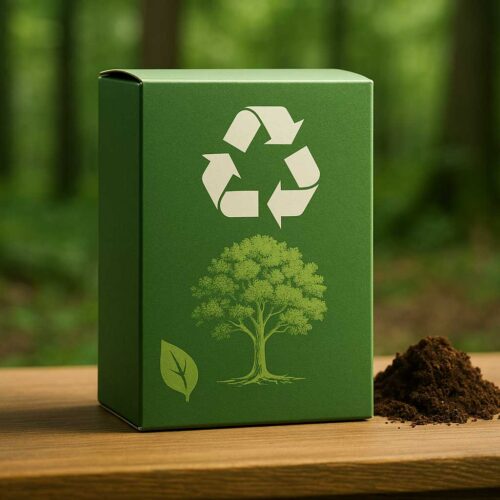
Regenerative and carbon-negative packaging materials help brands reduce environmental impact by restoring natural resources, lowering lifecycle emissions, and supporting circular packaging systems.
Sustainability has evolved from a competitive advantage into a core brand expectation. In 2026, leading brands are adopting circular packaging systems that are not only less harmful, but actively restorative.
In fact, over 70% of consumers are willing to pay more for packaging that contributes positively to the environment (PwC, 2024).
To meet these expectations, brands are turning to sustainable packaging innovations such as:
- Regenerative fiberboard sourced from carbon-sequestering forests
- Inks derived from algae, biochar, or other carbon-negative materials
- Compostable coatings and mono-material structures for streamlined recovery
- Clear, consumer-friendly messaging for reuse and recyclability
Collectively, these eco-friendly product packaging ideas do more than check a compliance box, they deepen brand loyalty among climate-conscious audiences and reinforce long-term ESG commitments.
Meyers is a U.S.-based packaging supplier and manufacturer supporting regenerative materials, carbon-conscious printing, and circular packaging systems across folding cartons and pressure sensitive labels.
Another major trend influencing structure and form is the shift toward modular and reusable packaging formats.
4. Modular and Reusable Structures That Add Value
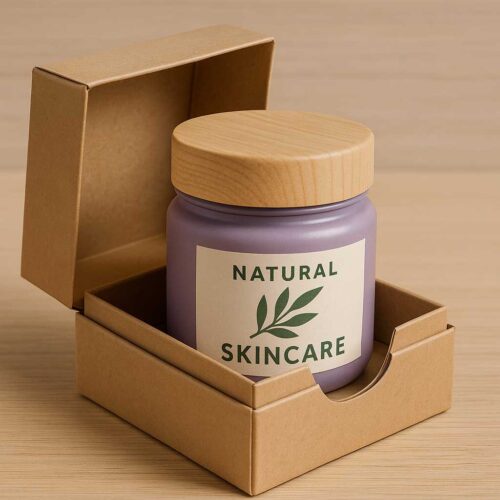
Reusable and modular carton formats continue to gain traction in 2026 as brands seek to reduce packaging waste while creating more memorable unboxing experiences. These evolving retail packaging trends reflect a shift toward designs that blend sustainability with creativity and deliver value beyond first use.
According to Alt Labs (2025), modular and refillable carton systems, designed for interchangeability, built-in components like inserts or trays, and easy conversion, significantly increase reusability and consumer appeal. These formats are especially effective for gift packaging, limited-edition collectibles, and subscription-based products.
Common reusable carton strategies include:
- Tear-away trays and convertible packaging formats
- Collector boxes designed for seasonal or premium editions
- Built-in refill compartments for personal care and household products
- Fold-outs and inserts that double as in-store displays or functional add-ons
Ultimately, these structural choices not only reduce waste but also enhance the custom packaging experience, offering consumers added utility while reinforcing your brand’s commitment to thoughtful design.
As packaging complexity increases, so does the need for speed. That’s why many brands are turning to automation-ready solutions to stay agile.
5. How Does Smart Carton Design Enable Automated Short-Run Production?
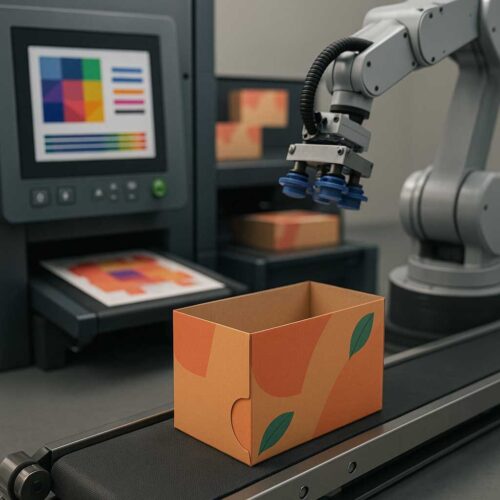
As production cycles accelerate, brands are rethinking how packaging is designed to keep pace. Increasingly, they’re prioritizing automation compatibility and agile workflows to reduce time-to-market and scale more efficiently.
Digital printing for short-run packaging, combined with prepress automation, plays a key role in achieving that flexibility, offering speed, accuracy, and customization at scale.
In fact, 50 % of all packaging tasks are expected to be automated by 2027 (Gitnux summary of MarketsandMarkets, 2025), making automation readiness a competitive necessity.
Key efficiency-forward packaging features include:
- Digitally optimized dielines and print-ready templates
- Variable data printing to meet compliance and regional needs
- Seamless integration with robotic packing and fulfillment systems
- Material-efficient design that reduces waste through right-sizing
Together, these innovations help brands streamline operations, lower costs, and adapt faster, without compromising on quality or visual impact. This trend allows brands to scale new products faster without sacrificing design or sustainability.
Of course, design isn’t just about structure and technology, it’s also about how packaging feels and looks. Premium finishes continue to play a crucial role in capturing attention.
6. Tactile Finishes That Drive Unboxing and Shelf Appeal
Packaging often serves as a product’s first, and most lasting, impression. In 2026, the use of premium packaging finishes is more than an aesthetic choice; it’s a strategic tool to capture attention both in-store and online.
According to Packaging Digest (2024), multisensory packaging,particularly tactile and specialty finishes like soft-touch coatings, embossing, and raised textures, can dramatically increase consumer attention and elevate the unboxing experience.
Packaging Digest (2024) emphasizes that these finishes stimulate emotional engagement and help products stand out on crowded shelves, with many brands reporting measurable increases in social media sharing and shelf appeal due to their sensory impact.
Leading finishes gaining traction in 2026 include:
- Embossing and debossing techniques that add tactile branding cues
- Holographic or foil stamping signals exclusivity and elevates luxury positioning
- Soft-touch matte coatings for a sleek, premium sensory experience
- Spot gloss applications that highlight key messages, logos, or design focal points
Altogether, these enhancements help packaging stand out while aligning with evolving consumer packaging trends. They also contribute to higher perceived value is crucial in competitive categories where shelf appeal directly influences purchase decisions.
Folding Carton Design Best Practices for 2026
Here’s how to make the most of these trends:
| Strategy | What to Focus On |
|---|---|
| Color Selection | Use bold, consistent palettes for shelf appeal and emotional impact learn more: about color palettes for packaging |
| Typography | Ensure readability across distances and screen formats learn more: about the best fonts to use in packaging |
| Structural Innovation | Design with e-commerce, reuse, and sustainability in mind |
| Sustainability | Choose mono-materials and regenerative sources with clear end-of-life labeling learn more: about Meyers’ sustainable packaging solutions |
| Marketing Integration | Include scannable codes, social handles, and storytelling prompts learn more: about how to use packaging as a marketing tool |
These techniques align with top folding carton design trends shaping the future of packaging.
Let’s Build What’s Next in Packaging
Contact Meyers to explore solutions built around the top folding carton design trends, from AI and automation to circular design and connected experiences.
Learn more about folding cartons and pressure sensitive labels designed to meet business and consumer needs.
FAQs
Yes. Digital printing and AI-driven design workflows enable affordable short runs, versioning, and personalization. For added flexibility, hybrid printing combines digital and flexographic technologies, allowing scalable customization without compromising speed or quality.
The biggest folding carton packaging trends for 2026 include smart packaging with GS1 Digital Link, regenerative and carbon-negative materials, AI-driven personalization, automation-ready design, and reusable carton structures. These trends help brands improve sustainability, efficiency, and consumer engagement.
Cartons are becoming more sustainable through regenerative fiberboard, carbon-conscious inks, compostable coatings, and recyclable mono-material designs. These innovations support circular packaging systems and reduce environmental impact without sacrificing performance.
Smart packaging uses technologies like GS1 Digital Link, QR codes, and RFID to connect physical packaging with digital content. These tools enable product transparency, traceability, loyalty engagement, and real-time supply chain insights through a single scan.
Yes. Modern folding cartons are designed for automation compatibility using digitally optimized dielines, variable data printing, and prepress automation. This allows brands to scale short runs efficiently while maintaining speed, accuracy, and visual quality.
Yes. Tactile finishes like embossing, soft-touch coatings, foil stamping, and spot gloss increase shelf appeal and enhance the unboxing experience. These finishes influence purchase decisions by increasing perceived value and emotional engagement.
Folding cartons provide an ideal surface for connected packaging technologies like GS1 Digital Link and serialized barcodes. Their print flexibility and structure make them well-suited for digital engagement, authentication, and sustainability storytelling.
Meyers is a U.S.-based packaging supplier and manufacturer specializing in folding cartons, pressure sensitive labels, and smart packaging solutions. We support brands with automation-ready design, sustainable materials, and connected packaging technologies built for scale.
Last Updated on February 6, 2026